Friday, January 13, 2017

Family Search 52 Stories Week 2

It's the second week of January, so that means it's time for my 52 Stories post. Here is the question I selected for week 2, though you will notice that they have again slipped a second question onto this one:
If you are past your child-rearing years, how have you adjusted to life as an empty-nester? What advice do you have for others who are entering this stage of their lives?

We have a son and daughter, and up until 1997 I worked full-time outside the home at MOMEDICO while doing the accounting and some marketing for our business, Organic Resource Management, Inc. at night and on the weekends. In the fall of 1997, our youngest was going to be entering first grade and we needed to make a decision about child-care before and after school for the two kids as it would no longer make sense to have a full-time nanny coming to our home. MOMEDICO had been purchased by a company in Alabama, and it was pretty clear that big changes were going to be made, including down-sizing due to duplicate positions. I had been with the company for 15 years, and was the Vice President of Marketing and Risk Management - the first female to make V.P. Taking everything into account, we decided that I would quit work and focus on my ORMI responsibilities, which I could do from a home office.

Working from home allowed me for the first time to be a room mother, a scout leader and the opportunity to sign up for more field trips with the kids. I could also pursue my passions for writing, genealogy, photography and house history research. I bring all this up to illustrate the fact that while my children were a huge part of my life, they didn't define my life. There were a lot of activities and interests I took part in that did not involve my kids.

Los Angeles
Our daughter graduated from high school in 2009, and finished college in the spring of 2012. She ended her college coursework with a session in Los Angeles, fell in love with the city, and decided that is where she wanted to work. I helped her drive out there in April of that year, staying long enough to see her settled in her first, very own apartment. A moving company delivered her larger belongings shortly thereafter. Empty nest, empty basement! I blogged about the experience of becoming an empty nester in 2012, and you can find that post here.

For me, becoming an empty nester has not been a big adjustment. Perhaps part of that stems from the fact that both of our kids went away to college, which somewhat prepared me for them not being home all the time. But I think the big reason is that my life, while it very much involved my kids, did not revolve around them. The organizations I belonged to, the activities I participated in, the friends I had - those all remained even when the kids moved away.

Similarly, my husband and I did not let parenthood define who we were/are. While we enjoyed our activities and travels as a family, we always made sure there was time for just the two of us as well. We accompanied each other on fun business trips, and also took some short breaks as a couple.

In many ways it is hard for me to relate to parents who cry and are depressed when their kids move out of the house. To me it is the circle of things - we began as a family of two, raised the kids to be independent and successful in their own right, and now we are back to our family of two. I discussed this in a blog post I wrote back in 2013. "Give Them Wings so They Can Fly" is one of my most popular posts, and you can read it here.

My tips for enjoying the empty nest (from my perspective of a 38 year marriage)  include:
- have a life outside of your kids, whether that is volunteering, exploring hobbies, or maintaining friendships
- don't neglect your relationship with your spouse, because the kids will be gone someday and it will be just the two of you again
- embrace the uniqueness of interacting with grown, independent children
- look for new opportunities in your personal and professional life

family love
I can truly say that I have enjoyed the different stages of parenthood, with all of their assorted trials and tribulations. But the empty nester stage has many positives and very few drawbacks. You'll have a whole new connection with your kids while rekindling your bond with the person who helped you become a parent.

Saturday, January 7, 2017

Family Search 52 Stories Challenge

Elsie Metz's 1912 travel journal 
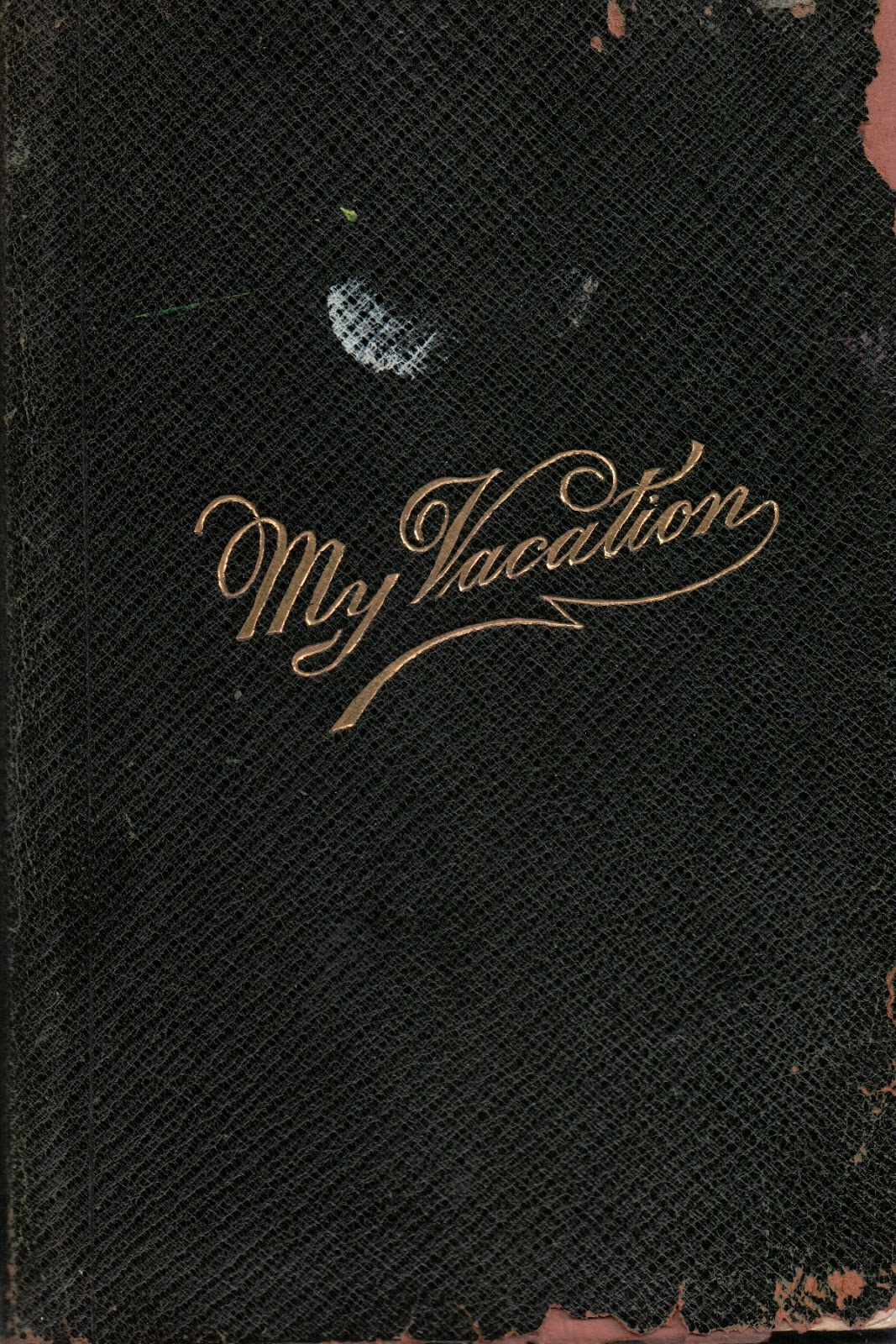
As someone who enjoys researching my family's history, I often wish some of my ancestors had left journals or diaries behind so that I could take a peak into their lives. (The journal pictured on the left is from a very distance cousin.) I used to keep a diary as a young girl, but I destroyed it before I went to college. I regret that now, as it would be fun to look back on my thoughts and feelings from back then. While I have taken the time to journal many of our trips over the past several years and I have a personal blog located here, I haven't really dedicated any time to writing the back story of my life. It seems like a pretty overwhelming endeavor, so it is easy to put it off.

When I saw a blog post from Family Search offering questions to help you write your story one week at a time, I decided to check it out. Here is a link to the article: Define Your Dash: Start Writing Your Personal History with the #52Stories Project. The article refers to a poem by Linda Ellis entitled "The Dash", which talks about the dash on a tombstone. The date before the dash is when a person was born, and the date after the dash is when the person died. But what happened during the "dash" is what is important and what the person's life was all about. You can read the whole poem here.

Writing one short story at a time each week for 52 weeks seems pretty manageable, and the article actually offers up 144 questions as options to get your creative juices flowing. It is my goal to complete this project, though I admit it may be difficult in February as I will once again be taking part in the Family History Writing Challenge. There I will be committing to writing about an ancestor every day for the entire month. It may be hard to do both of these, but I am certainly going to try.

The Family Search questions do not need to be answered in any order, nor do you need to write your stories in chronological order. For Week 1 I have selected the following question:
How did you earn your very first official paycheck as a teenager or young adult? How did that first job influence the career choices you have made since?

King's Food Host
Okay, they snuck two questions in on me with this one. Like most teenage girls, I began baby-sitting as soon as I could. As the youngest of four children, I always wanted a new baby in our family but that wasn't to be. My sister is 11 years older than me, so about the time she got too old/busy to baby-sit, I was ready to step into her shoes in our neighborhood.

The going rate was 50 cents/hour regardless of whether I watched the two children across from us or the six down the street! (Though there was a doctor in the next block paid $1 per hour for his one child. That was a coveted sitting job.) I bring up the babysitting only to illustrate how important it was to me to get a better paying job as soon as I could. Our family was not wealthy by any means, and I had to pay for my own make-up, entertainment and many of my clothes. So as soon as I turned 16 during my sophomore year in high school, I applied at the local King's Food Host restaurant. A restaurant chain located in 17 states, King's offered sit down dining where orders were called in from a phone built into the wall at each table. While waiting for their orders, guests could choose to listen to music from the individual jukeboxes located in the booths.

I was paid the current minimum wage of $1.60/hour as a waitress, and we were not allowed to accept tips. If a customer insisted on leaving a tip (and some did), it was to be placed in a jar and periodically the restaurant owner would have a small party for the staff. A number of my classmates worked there as well, and I remember the owner being quite reasonable about making sure our schedules were clear on nights when school activities were scheduled. One guy was in the marching band, another gal was a flag twirler and I was a Hooverette (a member of the precision marching drill team), so all of us needed to be off for football and basketball games. What a nightmare that must have presented for scheduling shifts.

My memories about working there include the fact that I had no car, so I walked the 1.2 miles there and back when I had to work. The scary part (looking back on it) is that I used to cut through the woods to get there as it was faster. I'm fairly certain I never did that at night - I think my dad would come and pick me up or I would catch a ride with a co-worker. I also remember a very unfortunate incident at work. There were two corner booths where the seats wrapped the corner and larger groups could sit together. There was limited table space, so I had the tray of beverages balanced on top of the napkin dispenser. When I set removed one of the drinks to set it on the table, the tray tipped, dumping a cup of coffee onto the lap of the unfortunate man sitting there. As I stared in mortification, he simply said, "Normally I would complain about the coffee not being hot enough, but not today." He was so gracious about it. The restaurant paid to clean his slacks and everyone was happy. Today I would have been sued over it no doubt.

By my junior year in high school I had moved on to a job at Josephs Jewelers, a high end jewelry store at the mall near my school. (Josephs will no doubt appear in another one of my 52 Stories.) But I never forgot how hard it was to wait tables, and I think everyone should do that job at least once in their lives to appreciate the service they take for granted when they go out to eat. That first job certainly influenced my decision to go to college and get a degree so that I would have other career opportunities to pursue down the road.


Saturday, October 22, 2016

Why Your Book Deserves a Business Plan

Why are you writing a book? You want it to be read, right? If that isn't your goal, then you can stop reading now. But if you do want to sell books, there is something you can do to help get them into the hands (or e-readers) of your target audience. Create a book business plan. While CreateSpace, the darling of Amazon, advises that a business plan be developed after the manuscript is written, you will be better served by working on a plan as soon as you come up with a book idea. If you have already begun writing the book, don’t give up on a business plan. The plan can be beneficial at any point, but the sooner you work on it, the better it can assist you.

The business plan enables you to look at your book as a business, and not just a creative exercise. No matter how you decide to publish, a book is a product that needs to be sold. The plan can help you determine if your book idea can actually sell. It will also help keep you focused on your reader and target market.

The key points of a book business plan include honing in on what your book is about; determining who your target market is; conducting market research; exploring publishing options; estimating resources needed to complete and market your book; and examining distribution, promotion and sales channels. Let's look at each of these.

1) What is your book about? You must be able to describe this succinctly.

2) Who is your target market? It is not “everybody”! Not a book has been written that absolutely everyone wants to read. Is your audience male, female, both? Children? What age range? Fiction or nonfiction? You need to know who you are writing for in order to appeal to them as buyers.

3) Market research will help you identify what competition exists for your book. What makes your book different from what is already out there?

4) How do you intend to get published? Will you approach a traditional publishing company? Does your subject matter lend itself to local or regional publishing houses, or university presses? Or are you going to set up an independent publishing company? How you answer this question may influence the way your book is written.

5) It is important to know how much it will cost to publish your book. While a traditional publisher may cover all of the expenses involved in getting a book into the marketplace, other options may require you to pay some or all of the expenses. You will need to think about the costs involved for editing, book design, printing and/or ebook development, and marketing expenses. These all add up quickly, and knowing what you will have to pay out of pocket can help you determine if the book makes sense from an economic standpoint.

6) What is the best way to get your book into the hands of your target audience? You need to have a plan for marketing and distributing the book. Where does your target market shop? Retail stores? Specialty stores? Online? This goes back to having a clearly defined answer to number 2 above. Don’t forget the power of your own networks - family, friends, co-workers, and all of your contacts on social media.

Once complete, have other people review your business plan. They may have suggestions and ideas you haven't considered. And remember that the plan isn't set in stone. It will evolve along the way. Give your book its best chance for success by developing a business plan!